Cape Town’s V&A Waterfront is now home to a pioneering initiative that transforms discarded fishing nets into valuable plastic materials, marking a significant step in tackling marine plastic pollution.
Minister of Forestry, Fisheries and the Environment, Dr Dion George, officially opened South Africa’s first fishnet recycling facility at Collier Jetty on 10 October. The containerised “micro-recycling pod” represents a collaborative effort between OCEAN Action Network, Ocean Plastic Technologies, and the South African Deep-Sea Trawling Industry Association, with the V&A Waterfront donating the site. The Marine Stewardship Council’s Ocean Stewardship Fund provided seed funding for the initiative.
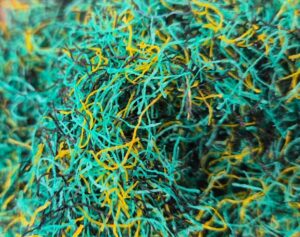
The self-contained recycling unit housed in a converted shipping container, can process up to 100 kilograms of used nets per hour. Through shredding, washing, drying and densification, the facility transforms discarded fishing gear into clean plastic flakes that can be reused in manufacturing. This prevents tonnes of material from reaching landfills or polluting the oceans.
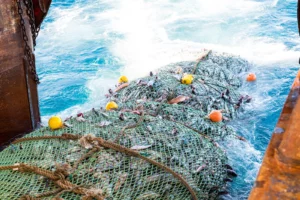
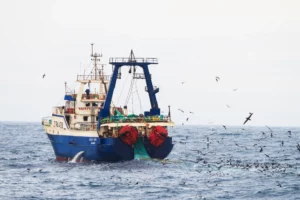
Minister George drew attention to how abandoned, lost or discarded fishing gear (ALDFG) poses a severe threat to marine ecosystems. These “ghost nets” continue to trap and kill marine life long after their use has ended, while releasing microplastics and toxic substances as they degrade. The issue extends beyond environmental damage, undermining fisheries, burdening coastal communities with replacement costs and affecting tourism and shipping.
Less than a decade ago, South Africa had little understanding of what happened to fishing gear at the end of its life cycle. A 2020 assessment under the Commonwealth Marine Litter Project revealed that appropriate collection facilities for unwanted fishing gear did not exist in many ports and waste management costs risked incentivising deliberate dumping at sea.
The new facility provides the infrastructure needed to prevent fishing gear from becoming waste, offering an environmentally sound and economically practical solution. Dr George emphasised that the initiative supports national commitments under the National Environmental Management Act and advances Sustainable Development Goal 14: Life Below Water.
“This project is a practical expression of a just transition,” Dr George noted, highlighting how circular economy thinking can create opportunity whilst reducing inequality.
Global leadership
The launch comes as South Africa leads international efforts to combat plastic pollution. Under its G20 Presidency, South Africa has placed marine plastic pollution firmly on the global agenda, developing a technical paper on ALDFG impacts that identifies retrieval and recycling combined with proper port waste reception facilities as the most effective prevention strategy.
South Africa is also at the forefront of negotiations for a legally binding global plastics treaty, advocating for comprehensive coverage of the full life cycle of plastics and ensuring fishing gear is specifically recognised in provisions on releases and leakages.
“This facility is a living example of thinking globally but acting locally,” Dr George stated. “It translates high-level treaty goals into everyday impact: cleaner oceans, better jobs and stronger communities.”
The minister affirmed his Department’s full support for the initiative, describing it as “a beacon of what is possible when collaboration, innovation, and commitment align.”
With the recycling pod now fully operational, the focus turns to scaling the initiative and creating a circular economy solution at the water’s edge.