A fierce debate around a recent study that claims bottom trawling in European waters costs society up to €16 billion (~ R335 billion) per year has exposed a widening gulf between conservation advocacy groups and the fishing industry.
The South African experience is markedly different: the fishing industry, environmental organisations and government recognise the vital role the trawling industry plays in the coastal economy and have worked together over decades to identify environmental impacts, measure them scientifically and reduce them through practical interventions.
A paper entitled The value of bottom trawling in Europe (Millage et al., 2026) was published in Ocean and Coastal Management on 28 April 2026. It immediately elicited a scathing response from The Skipper, an Irish-based magazine and online news platform that serves the commercial fishing industry in Ireland and the United Kingdom. Both articles are worth reading, but members of the fishing industry will find the analysis published in The Skipper particularly compelling because it clearly illustrates the ways in which the industry (and the trawling industry in particular) is vilified in the media, often on the basis of dubious data and sweeping generalisations.
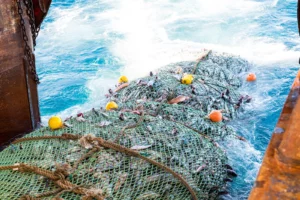
Researcher Katherine Millage and her eight co-authors analysed bottom trawling effort in European waters between 2016 and 2021, comparing the benefits of the activity – including protein supply and employment – against costs such as fuel, labour, discarded catch, subsidies and carbon emissions. Their primary conclusion is that the average net value of bottom trawling in Europe over this period was negative, ranging between −€2.07 billion and −€15.97 billion (approximately −R43 billion to −R335 billion).
The Millage et al. (2026) study attributes this apparent value destruction primarily to the release of carbon stored in seabed sediments through trawling activity. The authors estimate that disturbance of the seabed by trawling released approximately 112 million metric tons of organic carbon annually between 2016 and 2021. When combined with the CO2 emissions generated through the burning of fossil fuels by fishing vessels, the study concludes that in Europe the climate-related costs of bottom trawling far outweigh its economic and social benefits.
Awkwardly, the Millage et al. (2026) study’s calculation of carbon emissions by European trawlers is based on dated and rebutted science, previously heavily criticised. The paper Protecting the global ocean for biodiversity, food and climate, published in Nature in 2021 by Enric Sala and 25 co-authors, was formally rebutted in the same journal in 2023 (the rebuttal is behind a paywall). Professor Jan Hiddink and seven co-authors argued that the overestimate of carbon emissions from trawling was not a modest error of 10% or 20%, but an overestimate of several orders of magnitude – between 100% and 1 000%. Yet this is the fundamentally flawed model on which the key finding of the Millage et al. (2026) study is based.
Incidentally, the carbon model was not the only component of the Sala et al. (2021) study to come under scrutiny. The paper used three models to justify expanding marine protected areas (MPAs), all of which have been strongly criticised.
A pertinent debate in South Africa
The controversy surrounding the Millage et al. (2026) study and its promotion by National Geographic, is pertinent to South Africa because global narratives around bottom trawling increasingly shape public perceptions of all trawl fisheries – regardless of how they are managed.
As The Skipper’s analysis points out, the Millage et al. (2026) study treats European bottom trawling as “a monolithic activity requiring elimination… it does not distinguish between well-managed and poorly managed fisheries (or) consider gear innovation, including new net designs that reduce seabed contact, excluder devices that have dramatically cut bycatch elsewhere, electronic monitoring that allows real-time management response. It does not acknowledge that many European demersal stocks have been recovering, aided by quota management and fleet decommissioning.”
Just as trawl fisheries have been evolving in Europe, so too has South Africa’s trawl fishery for hake changed under increasingly rigorous scientific scrutiny and regulation – driven in large part by the fishery’s 22-year certification by the Marine Stewardship Council, a certification body globally recognised as a credible indicator of sustainable fishing practices.
Importantly, the South African industry has not denied that bottom trawling has environmental impacts. Instead, scientists, regulators, conservation organisations and industry have worked together to identify those impacts and reduce them over time.
One of the clearest examples is the introduction of a formal “trawl ring-fence” that effectively confines trawling to historically trawled grounds (only 4.8% of South Africa’s ocean territory) and prevents expansion into previously untrawled areas. The ring fence initiative was introduced in 2008. It was originally a voluntary undertaking by the fishing industry that was later incorporated into trawl permit conditions. It has since been strengthened through the 2019 declaration of several MPAs located inside the trawl footprint and, more recently in 2025, through a set of voluntary seabed management areas established by the industry in collaboration with environmental scientists and government.
The result is a fishery that operates within a spatially constrained and scientifically understood footprint that differs substantially from the broad portrayals of bottom trawling that increasingly dominate international media narratives.
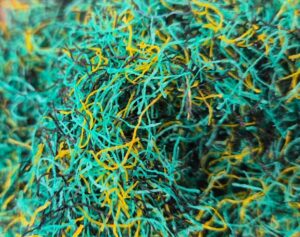
The South African experience also illustrates how conservation gains are often achieved through collaboration rather than polarisation. Scientists, regulators, conservation organisations and the fishing industry have collaborated to almost eliminate the incidental bycatch of seabirds in the trawl fishery, improve the management of bycatch and recycle used fishing nets, diverting them from landfill and creating value for local communities.
The negative trawl sentiment in Europe is therefore about more than carbon models or bottom trawling alone. It reflects a broader question about whether politicians, conservationists and/or food production industries should engage through polarisation or through evidence-based collaboration.
South Africa’s hake trawl fishery suggests that collaboration, while often slower and less dramatic than activism, can produce measurable environmental gains without abandoning the socioeconomic benefits that fisheries provide.
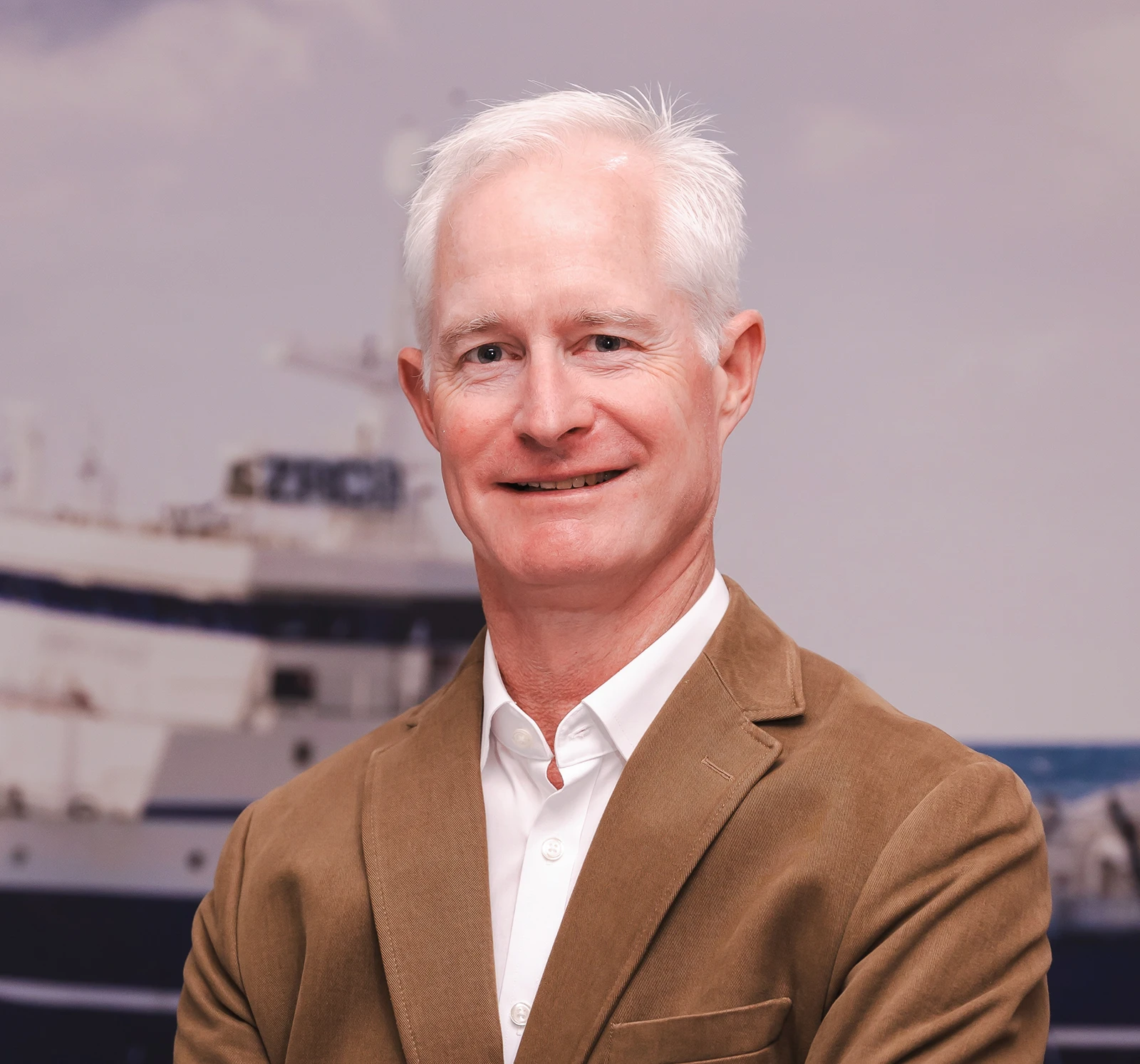
John Jankovich-Besan is Chairman of the International Harvest Sector CEO Council, an international association representing some of the world’s largest fishing companies involved in the harvesting of wild-caught seafood. Its members operate across major global fisheries and supply seafood products into international retail and food service markets. The organisation is influential because it brings together large commercial fishing interests involved in industrial-scale harvesting. As such, it engages in international discussions regarding fisheries science, management, seafood sustainability, marine conservation policy and food security. The Council also reflects a growing recognition within parts of the commercial fishing industry that long-term access to markets and resources requires a change in the (currently unfairly negative) reputation of the trawl fishing industry, distorted by poor science and sound bite sensationalism.