An open letter to David Maynier, nominated as the Minister of Forestry, Fisheries and the Environment
Dear Minister-designate David Maynier,
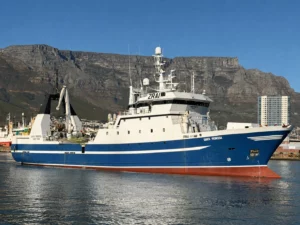
In many respects, the deep-sea trawling industry is one of South Africa’s most established and respected agri-export industries. The industry’s main product, Cape hake, is renowned in 26 countries around the world and hake is also a favourite seafood choice of South Africans.
The industry that supplies these markets is built on long-term investment, technical expertise, scientific management and deep local beneficiation. It is one of only a handful of fisheries in Africa to be certified by the Marine Stewardship Council (MSC), the world’s leading certification and eco-labelling programme for sustainable wild-caught seafood. MSC-appointed assessors have found South Africa’s hake stocks to be well monitored and in a good state, supported by a well-developed management regime that provides opportunities for participation by a wide range of stakeholders.
This is a significant national achievement. It reflects decades of cooperation between government, scientists, industry and other stakeholders, and it has helped South African hake secure and retain international competitiveness.
In short, the hake trawl fishery is well positioned to deliver long-term economic, social and environmental returns. However, there are several areas where progress is both necessary and possible.
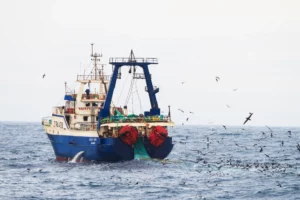
First, the duration of commercial fishing rights requires careful consideration. Long-term, 15-year rights have brought much-needed stability to the deep-sea trawl fishery and the 2022 rights allocation process has helped to stabilise rights-holding and encouraged investment. However, the 15-year rights period is challenging for capital-intensive fisheries. A modern stern trawler can cost in the region of R250 million, and the investment horizon for vessels, factories, markets and people extends well beyond 15 years. International experience has demonstrated that longer term or secure rights create stronger incentives for responsible stewardship and long-term investment. Where right-holders have confidence in their future in a fishery, they are more likely to invest in vessels, processing facilities, product quality, skills development and sustainable harvesting practices. A longer period of tenure may be beneficial for South Africa’s capital-intensive industrial fisheries too, with security of tenure supporting investment, competitiveness and job creation.
Second, the transfer of fishing rights needs a practical and enabling policy framework. Transformed right-holders should be able to buy and sell fishing rights to other transformed right-holders, with the approval of the Department, where such transfers support the objectives of the Marine Living Resources Act. The current overly restrictive transfer regime undermines efficiency, investment and transformation by preventing black shareholders and transformed companies from realising the value of their investments or restructuring in response to changing economic conditions.
Third, marine protected area planning must include meaningful consultation with the fishing industry. South Africa has declared 42 marine protected areas, covering 15.5 percent of the country’s ocean area (including its Southern Ocean territory), and further work is underway to identify and strengthen representative marine protection, including in offshore areas. The South African Deep-Sea Trawling Industry (SADSTIA) supports marine conservation, but marine protected areas can have significant implications for fishing operations and coastal livelihoods. The industry believes that structured working groups, similar to those used in the Fisheries Management Branch, should be established to consider the scientific and socioeconomic dimensions of marine protected area development and management.
Fourth, the decline in fisheries research capacity needs urgent attention. South African fisheries research has historically been world class and internationally respected. In recent years, however, the Fisheries Management Branch has faced significant challenges, including unreliable deployment of research and patrol vessels, declining oceanographic research, loss of technical and scientific staff, and serious funding and skills constraints. Sound fisheries management depends on strong science. Rebuilding these capabilities should be a national priority.
Fifth, South Africa needs to finalise a credible marine spatial plan for the offshore environment. SADSTIA is not opposed in principle to offshore oil and gas exploration or marine mining, but such activities must be planned responsibly and with due consideration for established industries, including fishing, that support thousands of jobs and generate long-term value. A well-developed marine spatial plan is essential for balancing the needs of ocean industries with the health of the marine ecosystem.
Finally, the fisheries component of the Oceans Economy Masterplan needs to be strengthened. The fishing industry has made important recommendations on rights, sustainability, climate change and research strategy, but these have not been adequately reflected in the plan. Without clear, practical guidelines for the future of fisheries, the oceans economy cannot realise its full potential.
Honourable Minister-designate, the deep-sea trawling industry is a national asset. It is certified sustainable, internationally respected, labour intensive, transformed and deeply rooted in South Africa’s coastal economy. It is also ready to work constructively with government.
SADSTIA stands ready to contribute its time, experience and resources to support the rational, efficient and sustainable management of South Africa’s fisheries. The Association looks forward to working with you and your Department to strengthen one of South Africa’s most successful agri-export industries, protect the marine resources on which it depends, and unlock greater long-term value for the country and its coastal communities.
Yours sincerely,
Innocent N. Dwayi
Chairman: South African Deep-Sea Trawling Industry Association