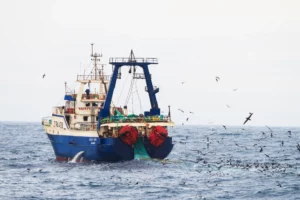
The frequency and quality of environmental reporting across the trawl fleet have improved following the appointment of Alistair Burls as Environmental Liaison Officer (ELO).
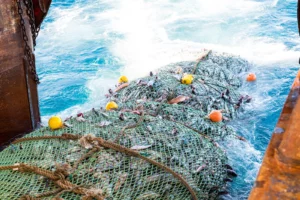
The ELO position is the first of its kind for SADSTIA, the South East Coast Inshore Fishing Association (SECIFA), and possibly for fisheries across the African continent. It was established to oversee the self-reporting system through which skippers and fishing crews document interactions with endangered, threatened and protected (ETP) species and monitor the trawl fishery’s impact on seabed habitats.
Burls brings both technical expertise and operational credibility to the role. He holds a National Diploma in Oceanography from the Cape Peninsula University of Technology and has extensive experience as a fisheries observer, marine mammal observer and programme coordinator at CapMarine. His background – including time spent as both a commercial and recreational fisher – has been instrumental in building trust with vessel crews and translating regulatory expectations into practical, workable processes.
ELO programme already delivering results
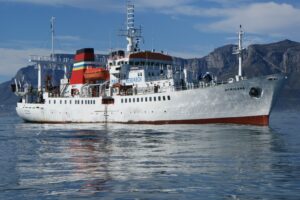
Nine months into the role, the ELO programme is already delivering results. Burls has visited approximately 80% of the fleet, covering all offshore and inshore vessels across major ports including Cape Town, Saldanha, Mossel Bay and Gqeberha. This extensive engagement has accelerated the uptake of self-reporting responsibilities and reinforced a shared sense of accountability across the industry.
According to Burls, the response from vessel crews has exceeded initial expectations. Concerns that the programme might be perceived as an additional burden have not materialised, with crews demonstrating strong interest and willingness to engage with the reporting requirements. Skippers and crew members have been highly receptive to guidance on meeting these requirements in practical and safe ways, and their openness has been fundamental to the programme’s effectiveness.
To date, Burls’ work has focused on training and encouraging consistent and accurate reporting. Central to the programme is the reporting of “trigger events” – instances where vessels interact with ETP species. Previously, many crews were unaware of the reporting requirements and the level of documentation required. Through vessel visits and updated training materials, this knowledge gap has been addressed. Reporting templates have also been refined to ensure incidents are clearly flagged, prompting crews to submit detailed trigger reports promptly. The result is more complete, timely and reliable data.
Looking ahead, SADSTIA is working towards near real-time reporting, supported by photographic evidence and trip-based submissions. There is also potential for onboard camera systems and artificial intelligence to further support safe handling and release practices, particularly for larger bycatch species.
Beyond the technical advances, the most significant shift has been cultural. Crews are increasingly engaged and thinking proactively about environmental performance rather than simply meeting minimum requirements. While interactions with ETP species cannot be eliminated entirely, the focus has shifted firmly towards improving outcomes when they occur.